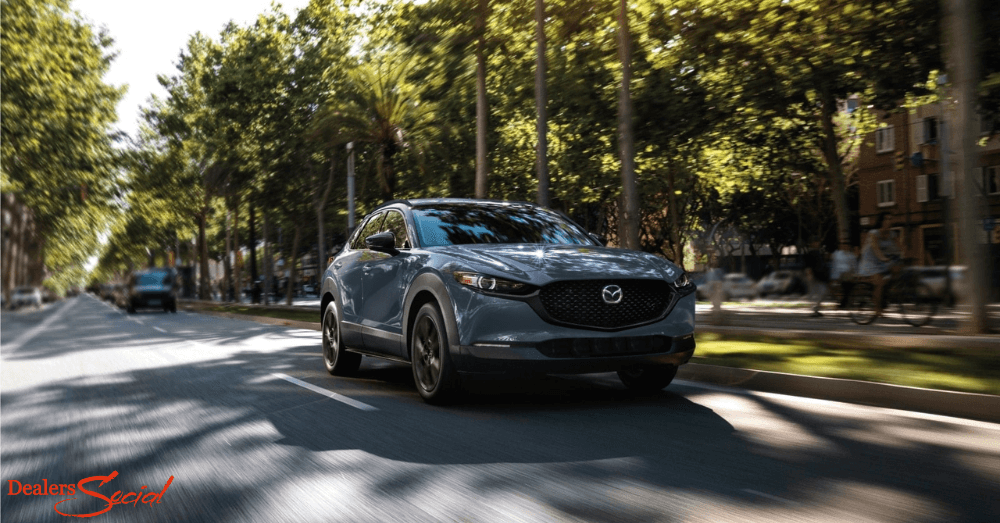
The 2025 Mazda CX-30 Turbo throws conventional subcompact SUV wisdom out the window. While most small crossovers prioritize practicality over personality, this turbocharged rebel delivers 250 horsepower of genuine driving excitement wrapped in a surprisingly luxurious package. Yes, you’ll sacrifice some cargo space and fuel economy, but you’ll gain something rare in this segment: a vehicle that actually makes you want to take the long way home.
- Turbocharged 2.5-liter engine rockets this crossover from 0-60 mph in just 6.2 seconds, beating even the Golf GTI
- Interior materials and build quality rival vehicles costing $10,000 more, with genuine leather and premium touches throughout
- Cargo capacity trails most competitors significantly, making this more about lifestyle than pure utility
What Makes This Engine Special
Pop the hood and you’ll find Mazda’s turbocharged 2.5-liter four-cylinder that puts out 250 horsepower and 320 lb-ft of torque on premium fuel. Run regular gas and those numbers drop to 227 hp and 310 lb-ft, but you still get a torque monster that delivers peak twist at just 2,500 rpm.
This low-rpm torque delivery transforms how the CX-30 feels on the road. Need to merge onto a busy highway? The turbo responds instantly without hunting for the right gear. Climbing a steep grade? The engine barely breaks a sweat. Compare this to the naturally aspirated version that takes 7.5 seconds to hit 60 mph, and the turbo’s 6.2-second sprint feels downright quick.
The six-speed automatic transmission works well enough, though it tends to hunt for higher gears to save fuel. Sport mode wakes things up considerably, holding gears longer and keeping the engine in its powerband. All CX-30 Turbo models come with standard all-wheel drive, which helps put all that torque to the ground without drama.
Interior That Punches Way Above Its Price
Slide into the driver’s seat and you’ll immediately notice this doesn’t feel like a $35,000 crossover. The leather steering wheel feels substantial in your hands, the seats wrap around your body with genuine support, and every surface you touch has a premium feel.
Mazda deserves credit for using real materials instead of the fake stuff plaguing most vehicles at this price point. The leather is actual leather, not synthetic. The dashboard features soft-touch materials where your arms rest. Even the climate controls use proper knobs and buttons instead of frustrating touch controls.
Upper trim levels add heated seats, a heated steering wheel, and a 12-speaker Bose sound system that delivers surprisingly rich audio. The 10.3-inch display looks modern, though Mazda’s rotary controller interface takes some getting used to. Apple CarPlay and Android Auto work wirelessly, which feels appropriately premium.
Front passengers get plenty of space to stretch out, but the rear seat tells a different story. Legroom back there feels tight for adults, and fitting three people across the bench requires some negotiation. This crossover clearly prioritizes front-seat comfort over maximum passenger space.
Driving Dynamics That Actually Matter
Here’s where the CX-30 Turbo really separates itself from the pack. Most subcompact SUVs handle like tall, wobbly boxes on wheels. This one actually responds to your inputs with precision and confidence.
The steering weights up nicely as speeds increase, providing real feedback about what the front wheels are doing. Turn into a corner and the CX-30 feels composed and planted, with minimal body roll. The chassis feels more like a well-tuned hatchback than a typical crossover.
Ride quality strikes a good balance between comfort and control. The suspension soaks up most road imperfections without making the vehicle feel floaty or disconnected. On rougher pavement, you’ll notice the firmer setup, but it never crosses the line into harsh territory.
With eight inches of ground clearance, the CX-30 can handle dirt roads and light off-road situations that would stop a regular car. There’s even an off-road drive mode that adjusts the drivetrain and traction control settings, though this vehicle clearly works best on pavement.
The Fuel Economy Trade-Off
All that performance comes with a predictable penalty at the pump. EPA ratings show 22 mpg city and 30 mpg highway for the turbo, compared to 26 city and 33 highway for the base engine. That’s a notable difference that adds up over time.
For context, drivers upgrading from older used cars might still see improved efficiency. But compared to other new subcompact SUVs focused on maximum fuel economy, the CX-30 Turbo clearly prioritizes fun over frugality. The six-speed automatic doesn’t help, spinning at higher RPMs during highway cruising compared to competitors with CVTs or more gears.
Cargo Space Reality Check
Walk around to the back and you’ll find the CX-30’s biggest compromise. Cargo space measures just 20.2 cubic feet behind the rear seats, expanding to 45.2 cubic feet with the seats folded down. That’s smaller than most competitors and even some regular cars.
Weekend trips and grocery runs work fine, but this crossover won’t handle the cargo duties of larger families. Think of it as a raised hatchback rather than a traditional SUV, and the space makes more sense. Mazda clearly chose style over maximum utility.
Pricing and Value Equation
The CX-30 Turbo Carbon starts at $34,635, jumping to $38,645 for the loaded Premium Plus trim. That pricing puts it in interesting territory, competing with both mainstream competitors and entry-luxury options like the BMW X1 or Audi Q3.
You get standard all-wheel drive, the turbocharged engine, premium interior materials, and a full suite of safety features for that money. Whether it represents good value depends on your priorities. If driving enjoyment and interior quality matter more than maximum space and efficiency, the math works out well.
Safety and Tech Features
Standard safety equipment includes automatic emergency braking, blind-spot monitoring, and adaptive cruise control. The CX-30 earned top safety ratings from both NHTSA (5 stars) and IIHS (Top Safety Pick+).
Higher trims add a 360-degree camera system, parking sensors, and traffic sign recognition. The infotainment system includes wireless smartphone integration, though some controls feel awkwardly placed and response times can lag when switching between functions.
The Final Verdict
The 2025 Mazda CX-30 Turbo succeeds at being genuinely different in a segment full of appliance-like crossovers. Instead of chasing maximum practicality or rock-bottom pricing, Mazda built something that actually rewards the driver.
If you need maximum cargo space or the best possible fuel economy, this probably isn’t your vehicle. But if you want a small SUV that delivers genuine driving pleasure with a premium interior feel, the CX-30 Turbo hits those targets brilliantly.
It proves that not every crossover has to prioritize utility over driving enjoyment. Sometimes, choosing the vehicle that makes you smile every time you get behind the wheel matters more than squeezing out every cubic foot of cargo space.