If you’ve shopped for a new car lately, you’ve probably bumped into a confusing trio of names: Android Auto, Android Automotive, and Google built-in. They sound nearly identical, yet they do very different jobs. The shortest version? One mirrors your phone. The other lives inside your car and works whether your phone is in your pocket or back home on the kitchen counter.
- Android Auto projects your phone onto the dashboard. Google built-in runs natively in the car.
- Google built-in adds Google Maps, Assistant, and the Play Store without needing a phone tether.
- Automakers like Volvo, Polestar, GM, Honda, Ford, and now Mazda ship vehicles with it.
The Quick Definition Most People Miss
Android Auto is a phone-based screen-mirroring technology that lets users pull up select apps on the in-vehicle infotainment display. It’s the Google version of Apple CarPlay. Pull the USB cable or break the wireless link, and the experience disappears.
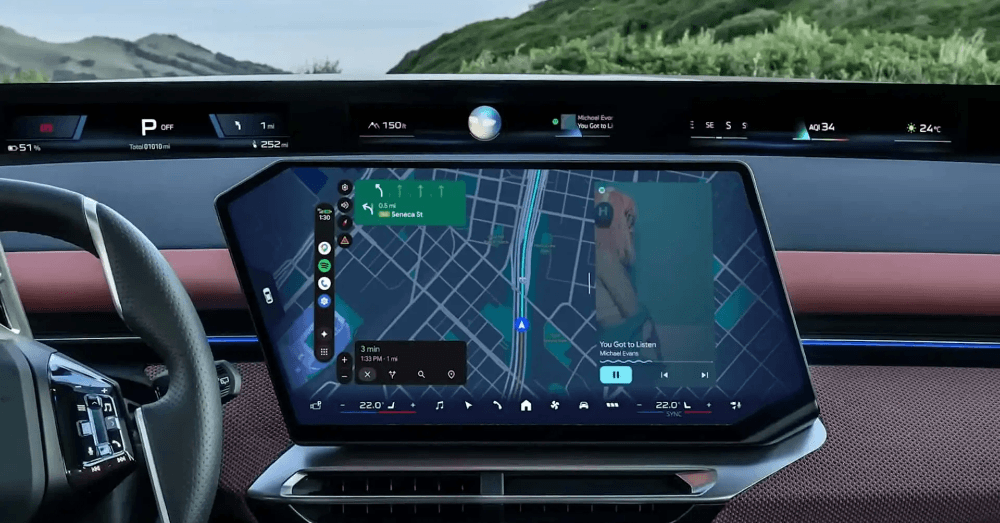
Android Automotive is the operating system that powers the car’s screens directly. Marketed as Cars with Google built-in, or colloquially just Google built-in, it’s an open-source operating system designed for use in vehicle dashboards, based on Android. Carmakers can ship Android Automotive without any Google apps at all, so the “Google built-in” badge specifically means the vehicle ships with Google Assistant, Google Maps, and the Google Play store baked into the system.
What Google Built-in Adds Beyond Android Auto
The biggest practical change is that your phone becomes optional. One advantage of Google built-in compared with Android Auto or Apple CarPlay is that you don’t have to connect a phone at all. A Google account isn’t required for every feature, but you’ll need one to download apps, and the system gets more personal once you sign in. You can hop in, hit “Hey Google,” and start navigating without ever pulling your phone out.
Then there’s deeper vehicle control. Because the OS lives in the car, voice commands can reach climate, audio, and other native functions. Android Automotive is built to control settings like the air conditioning system, audio functions, and door locks. You can talk to your interface and say, “Hey, I’m freezing,” and it’ll bump up the heat. Android Auto can’t touch any of that.
Google has also been adding features Android Auto simply doesn’t offer. A recent update brought the ability to watch video or browse the web on the infotainment screen when parked. Manufacturers can choose to include the YouTube app for that purpose. And there are mini games, called GameSnacks, that owners can install and play when it’s safe to do so.
Battery life is another quiet win. Sure, you can go wireless with Android Auto, but Android Automotive doesn’t drain your phone in the process. Your phone stays cool and charged because it isn’t doing the heavy lifting.
Where Android Auto Still Has the Edge
Phone projection isn’t going anywhere, and there are real reasons people prefer it. Android Auto has a much larger app library than Android Automotive does today. Got a favorite local radio station and want to listen out of range? Odds are it has an app on the Google Play Store you can grab. That same app may not exist on Android Automotive yet.
Owners of newer cars have flagged smaller annoyances too. On a 2025 Acura MDX, for example, when playing Spotify through Android Auto, the song name shows on the left side of the instrument gauge and pops up briefly on the HUD. With Spotify running through the built-in app, an icon called “App” sits in the gauge and nothing shows on the HUD. Little integration quirks like that still favor the older platform.
Maturity matters as well. Android Auto runs on hundreds of millions of cars, with Google’s data showing the app supports over 250 million vehicles, while Google built-in is still rolling out.
Which Cars Have Google Built-in Right Now
The list is growing fast. Automakers currently offering it include Polestar, Volvo, General Motors (parent company of Cadillac, Chevrolet, and GMC), Honda, and Nissan. So whether you’re looking for a compact crossover like the Nissan Rogue and Honda CR-V, or a family-friendly people mover like the Chevrolet Suburban, Google built-in shows up across a wide range of makes and models. Luxury shoppers aren’t left out either, with the tech available on the Cadillac Lyriq, Lincoln Navigator, and Volvo XC90.
More are coming. In December 2024, Hyundai Motor Group announced it adopted Google’s Android Automotive Operating System to broaden its software ecosystem. In July 2025, Mazda revealed its all-new 2026 CX-5, the first Mazda model shipping with Google built-in. One catch worth noting: GM recently said all of its future Ultium-based electric vehicles will use Android Automotive but skip Android Auto and Apple CarPlay. That makes the built-in experience the only Google option in those cars.
Picking the Right Setup for Your Driveway
If you’re shopping new and you want a system that boots up the moment you start the car, with maps and voice control that don’t care where your phone is, Google built-in is the better fit. If you live inside niche apps, swap phones often, or want flexibility on older vehicles, Android Auto still earns its keep. Plenty of cars offer both, so you don’t have to commit to one camp forever. Try them side by side during a test drive and see which one matches the way you actually drive.