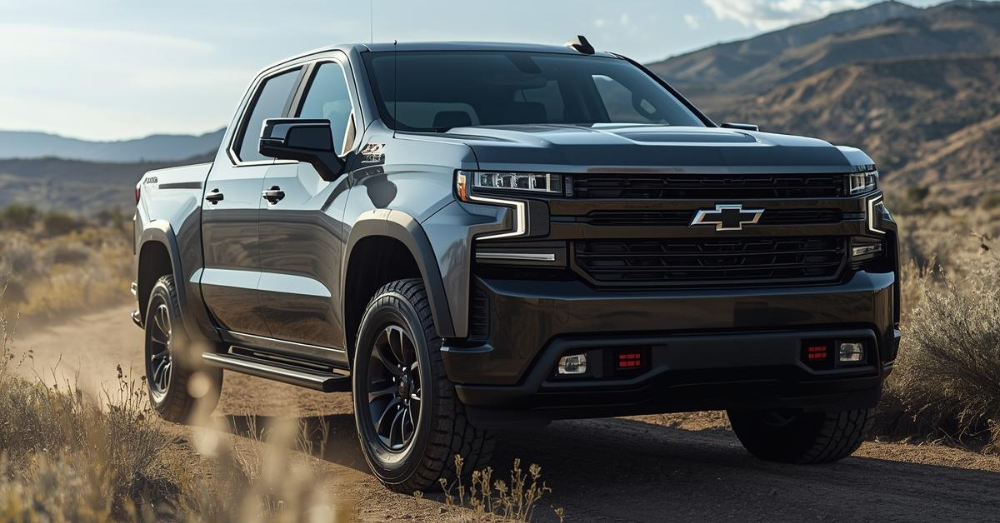
Chevrolet’s newest electric truck, the 2026 Chevrolet Silverado EV Trail Boss promises adventure with up to 478 miles of range and serious off-road hardware. But does this lifted EV really give you the Trail Boss experience, or is it just wearing the costume? After digging through reviews and real-world testing, this electric pickup has some clear strengths and a few head-scratching compromises that potential buyers need to know about.
- The Trail Boss is available with either a 170-kWh Extended Range battery providing 410 miles of EPA-estimated range, or a massive 205-kWh Max Range pack with a GM-estimated 478 miles of range.
- With the Extended pack, the Trail Boss makes 625 horsepower and 775 pound-feet of torque, while the Max Range version cranks out 725 horsepower in Wide Open Watts mode.
- The base Trail Boss starts at $72,095 with the Extended Range pack, while the Max Range version jumps to $88,695.
Range That Actually Works
With up to 478 miles of range on a full charge, the Max Range version has about 62 miles more than the Extended Range version and some 186 miles more than the Standard Range Work Truck. That’s a lot of battery capacity, and real-world testing shows it’s not just marketing hype. In a recent range test, the Trail Boss covered well over 400 miles at 70 mph, despite wearing all-terrain tires and hauling over 200 kWh of battery capacity.
Even better, the truck kept going for 50 more miles after hitting 0% on the battery indicator. That’s the kind of buffer that makes range anxiety disappear on long trips. Chevy says the big battery packs can add 100 miles of range in 10 minutes at a 350-kW DC fast charging station, which means a fully charged Silverado will have plenty of juice to get you to the fishing hole or bike trail and then power a weekend’s worth of activities before driving home.
Off-Road Performance Has Some Gaps
The Trail Boss gets proper off-road upgrades, including a 2-inch lift, half of which comes from new 18-inch wheels fitted with 35-inch tires, while the other half is courtesy of upgraded coil springs. The specially designed front bumper provides an approach angle of 31.6 degrees, along with a 19.2-degree breakover angle, a 25.1-degree departure angle, and 10 inches of ground clearance.
Now for the letdown. While it features a 1.0-inch suspension height increase and another inch of additional ground clearance thanks to its tires, the 2026 Silverado EV Trail Boss lacks any sort of automatic mechanical or electromechanical selectable differential locker. That’s a big miss for serious off-roading. The limits of an independent rear suspension system and GM’s use of four-wheel steering brought some issues with articulation, meaning the Trail Boss would regularly lift a wheel on obstacles, then quickly shift its weight in the air for a harsh landing.
Chevrolet says the Trail Boss is for the adventure enthusiast who needs a truck with a silent drive, unique cargo features like the false rear-bulkhead wall, and some off-road chops. Weekend warriors, basically, not rock crawlers.
Tech and Towing Power
This is where the truck shows what it can really do. The truck can output power directly from plugs in the bed at a solid 10.2 kW, which is enough to power all but the fanciest campsites, and even most worksites. The Trail Boss version with the extended range battery pack offers a max towing of 12,500 pounds and 2,100 pounds of payload.
The four-wheel steering system is legit useful. You don’t realize just how much of an advantage it is until you need to make a U-turn on a trail that’s merely the width of the truck plus some extra runoff, and you don’t need to maneuver using more than a three- or four-point turnaround. There’s also a Sidewinder mode that lets all four wheels turn in the same direction to move diagonally at low speeds.
The Price Reality
Let’s talk about cost. With the $72,095 starting price, you can get an ICE-powered Silverado 1500 ZR2 and only spend an extra $100, while the $88,695 Trail Boss Max Range price means you could get the Silverado 1500 ZR2 Bison Edition and still have $7,665 in your pocket.
The truck’s range doesn’t make it more efficient than a smaller, lighter vehicle; it just has an enormous 205-kWh pack. Compared to an AWD Blazer EV, for example, the Silverado will go about 50% less distance on the same amount of energy. The Trail Boss weighs in at a manufacturer-claimed 8,906 pounds. That’s a lot of mass to haul around.
Should You Actually Buy One?
The 2026 Silverado EV Trail Boss Max Range works best for someone who wants the electric truck experience and needs long-distance legs. If you tow occasionally, need a mobile power station for camping or work, and want something that can handle dirt roads and mild trails, this truck fits the bill. The nearly 500-mile range takes away the biggest concern people have about electric trucks.
But if you’re serious about off-roading and want locking differentials and real articulation, or if you’re budget-conscious and don’t need the massive battery, you might want to look elsewhere. A few basic misses prevent this truck from being everything it could be. The lack of a differential locker on a truck wearing a Trail Boss badge feels like an oversight that some buyers won’t forgive.
You get a comfortable, capable electric truck with a range that rivals gas-powered vehicles. You don’t get a hardcore off-roader or a bargain. Whether that works for you comes down to how you actually plan to use it.