A dashboard warning light, a sudden thud from a tire, or an engine that just quits can rattle anyone, and it feels ten times worse once the sun goes down. Darkness hides you from passing drivers and makes every decision more urgent. The good news is that a calm, ordered response keeps a bad night from turning into a disaster.
- Get your car fully off the travel lanes and switch on your hazard lights right away.
- Add reflective triangles or flares so other drivers spot you from a distance.
- Stay buckled inside when you can, and call for help instead of trusting a stranger who pulls over.
Get Off the Road Before You Do Anything Else
The moment you feel something go wrong, ease off the gas and steer for the right shoulder or the nearest exit. Aim for a flat, straight stretch where approaching drivers can see you well ahead of time. Avoid stopping just past a curve or over the crest of a hill, since those spots hide your car until it’s too late for someone to react.
Once you’ve picked a spot, get as far from the travel lanes as the pavement allows. A few extra feet of clearance gives you real breathing room. If you’re dealing with a tire blowout, resist the urge to slam the brakes. Hold the wheel firmly with both hands, ease off the accelerator, and let the car slow down before you pull over. Yanking the wheel or braking hard is how people lose control.
Make Yourself Impossible to Miss
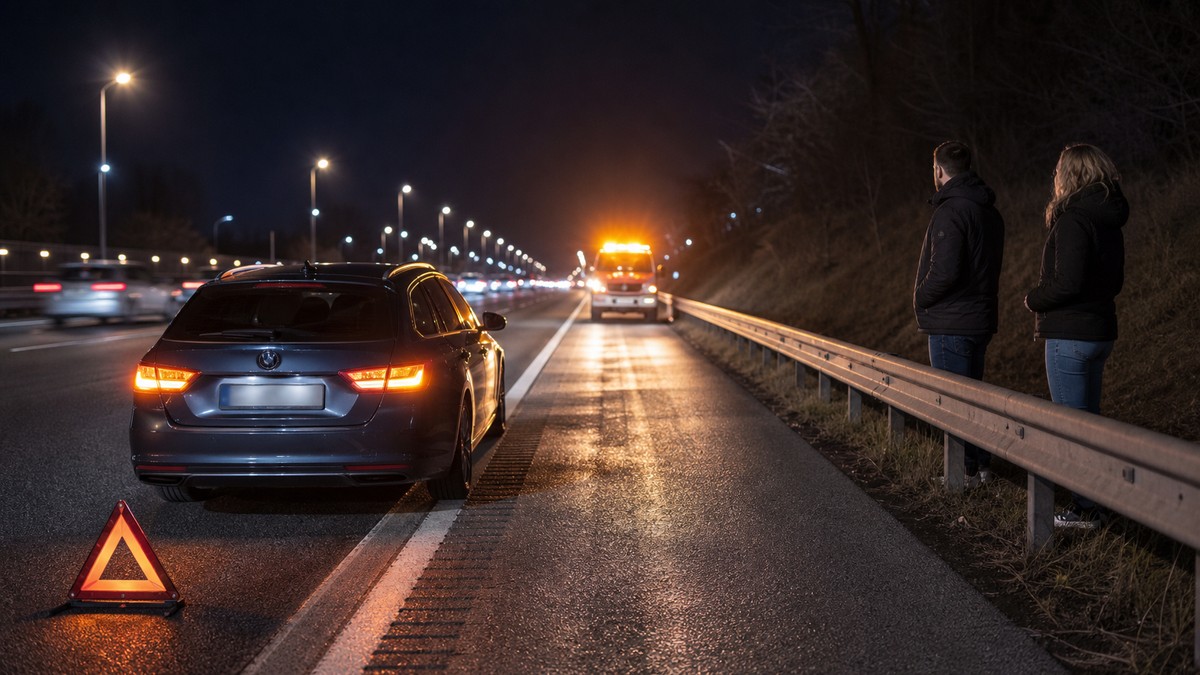
Flip on your hazard lights the instant you stop, even while you’re still rolling to a halt. Those flashers are your first signal to everyone behind you, and after dark they do a lot of the heavy lifting. Once you’re stopped, set out reflective warning triangles or flares, placing them behind the vehicle so traffic gets plenty of notice. A triangle positioned well back from your car buys approaching drivers time to move over.
A common spacing is one marker close to the bumper and others farther back along the shoulder. If you keep a reflective vest or a flashlight in the trunk, now is the moment to use them. The whole point is simple. You want a driver coming up on you to register your car long before they reach it.
Stay Put or Step Away
This part surprises people. In most cases, the safest place is inside your car with your seat belt fastened and the doors locked. Standing beside a disabled vehicle on a busy shoulder puts you right in the path of traffic, which is exactly where you don’t want to be. Buckled inside, you have the frame of the car around you if someone drifts onto the shoulder.
There are moments when getting out makes more sense. If the shoulder is too narrow, if a guardrail traps you against the lanes, or if you smell fuel or see smoke, leave the car. When you do, exit from the side facing away from traffic, never the traffic side. Then move well behind a barrier or up an embankment where passing vehicles can’t reach you. Keep everyone in your group together and away from the pavement.
Call for Help the Smart Way
With your car marked and everyone accounted for, reach for your phone. Call your roadside assistance provider, a tow service, or the non-emergency line for local law enforcement. Give them your exact location, the mile marker or nearest exit, and a quick description of the problem. Many highways also have call boxes or a 511 traveler line you can use if your phone dies.
Be cautious about anyone who stops on their own to offer a hand, especially late at night. Keep your doors locked and roll the window down only a crack if a stranger approaches. Thank them, say help is already on the way, and let the professionals you called handle it. A tow truck with a rotating light and trained operators is a far better bet than an unknown driver.
Turn a Rough Night Into a Manageable One
A breakdown after dark is stressful, but the priorities are consistent. Pull fully off the road when possible, make the vehicle visible with hazards and reflectors, stay buckled inside if there is no immediate hazard, and call for real help. Every step in that chain works toward one goal, which is keeping a second crash from ever happening. Run through it in your head now, and you’ll move on instinct when the real thing hits.