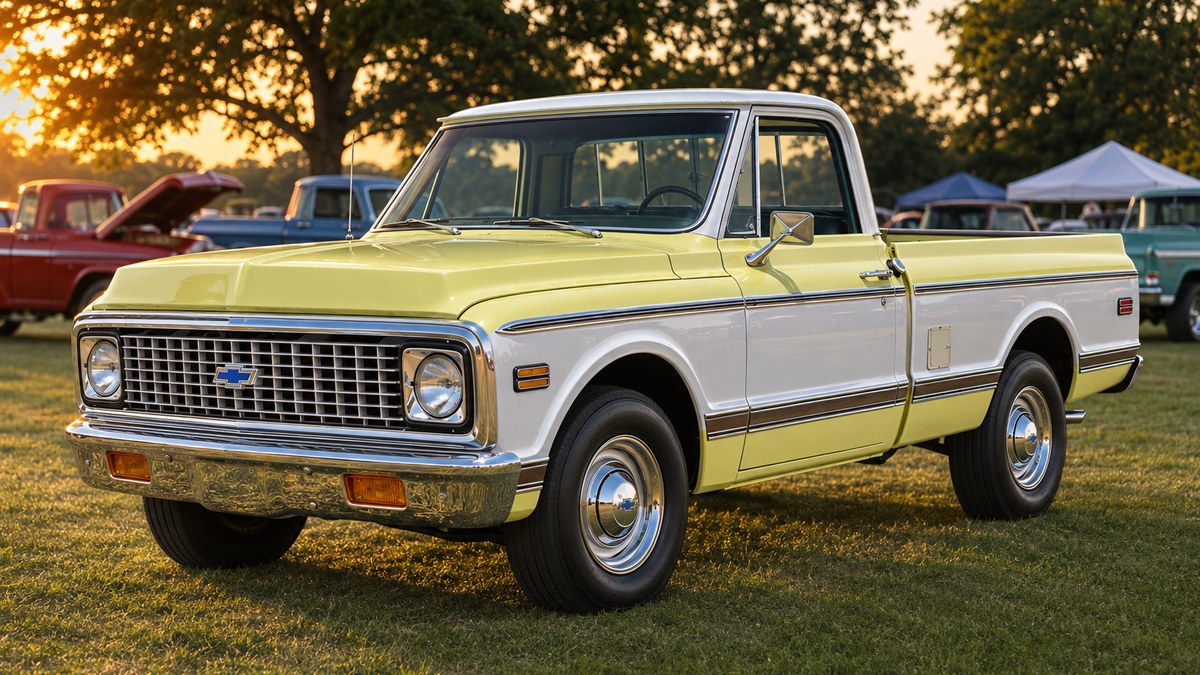
Pickups were built to haul hay, lumber and tools. Few people who bought one new pictured it crossing an auction block decades later and selling for six figures. Plenty of old trucks have done exactly that, and the buyers chasing them know what they want.
- Interest from younger generations of buyers has supported demand for some old trucks.
- Modified 1967–72 Chevrolet and GMC pickups have posted some notable auction results, but demand varies by generation, condition and build quality.
- Condition, paperwork and the quality of any modifications shape what collectors pay.
What Moves Old Truck Values
Classic pickups were never rare. They were built in large numbers to work. More buyers have helped push up values for some vintage pickups, but original production totals tell you little about how many solid examples are still available.
Much of that demand comes from age and memory. Barrett-Jackson’s Craig Jackson has said Gen Xers and millennials now want the trucks and SUVs they remember from their younger years. For many owners, a pickup connects to family, a first driving lesson or a summer job. The community matters, too. Truck shows such as Dino’s Git Down in Arizona give owners a place to meet and compare builds.
Condition Sets the Baseline
Buyers compare condition first. Two trucks of the same year and model can sit thousands of dollars apart based on rust, panel fit, frame health and how well the mechanical parts have held up. Hagerty puts the average value of a first-generation 1960 to 1966 Chevy C/K in #2 condition at $39,600, up 4 percent.
Condition also covers honesty. A truck that has worn its years openly is easier to judge than one hiding filler under fresh paint.
Documentation Adds Confidence
Paperwork gives buyers a way to check what a seller says. Build records, receipts for major work, ownership history and photos taken during a restoration all help a bidder understand what they are getting. For an unrestored survivor, records can support claims of originality. For a modified truck, they show who did the work and which parts went into it.
Some collectors will pay more for an untouched truck with solid records than for a freshly painted one with no history. Between two similar trucks, the one with the stronger paper trail usually draws more trust, and trust tends to show up in the bidding.
Judging the Quality of a Build
Modified pickups draw a lot of attention, and they vary widely. A well-engineered build with updated suspension, a modern drivetrain and upgraded brakes can be a comfortable, reliable driver. A rushed build with mismatched parts can be a money pit no matter how good it looks.
Smart buyers look past the paint and check the details. How was the wiring routed? Was the chassis reinforced for the added power? Did the work come from a known builder, and is there a record of it?
Top builds can sell far higher. At Scottsdale in January 2016, a bidder paid $214,500 for a customized 1957 Chevrolet 3100. The auction catalog lists the truck as QuikSilver and records its 2014 Barrett-Jackson Cup win. Results like that are rare and reflect exceptional craftsmanship, not a typical price for a modified truck.
Generation and Body Style Still Matter
A strong auction result for one modified 1967–72 Chevrolet or GMC pickup does not lift every truck from those years. Compare trucks within the same generation, then narrow by cab, bed length and drivetrain. A buyer shopping for a short-bed regular cab may not find a long-bed truck from the same year comparable.
Interest is spreading to other eras. Hagerty identified the 1980–86 Ford F-Series as a gainer in its July 2026 update.
Shop for an Old Truck With Clear Eyes
Not every truck keeps climbing. Hagerty recently flagged six trucks and SUVs that slipped last quarter. Values depend on the specific truck in front of you, not on market headlines.
Pick a truck that means something to you, and buy the best condition you can afford. Decide early whether you want an original survivor or a modern build, because that choice shapes both the price you’ll pay and the fun you’ll have. Ask for records, inspect the work closely, and compare several examples before you commit.


